Campaigns

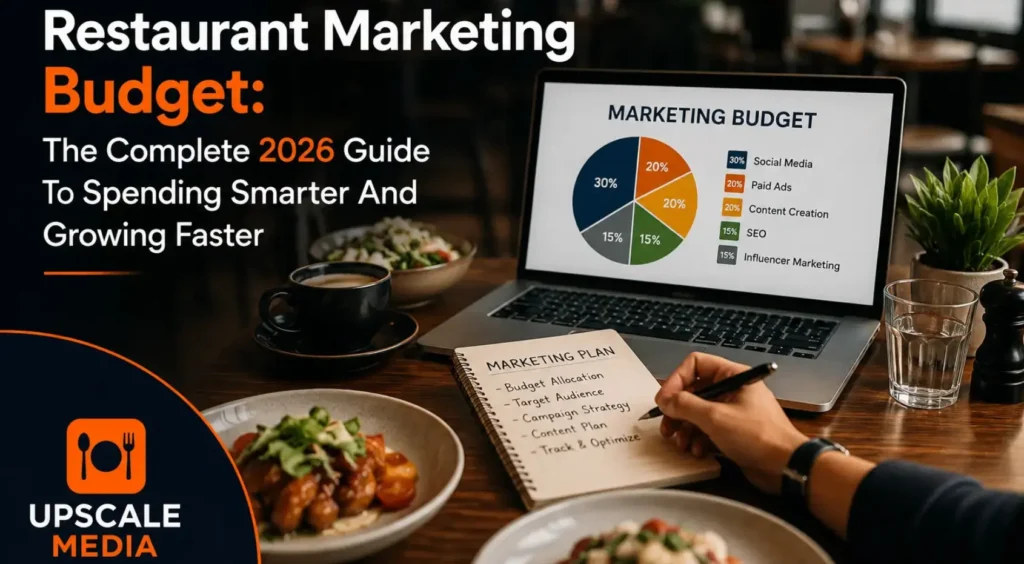
Restaurant Marketing Budget: The Complete 2026 Guide to Spending Smarter and Growing Faster

Most restaurant owners don’t struggle with marketing ideas. They struggle with knowing how much of those ideas they can actually afford  and where the money should go first. That uncertainty is expensive. Restaurants that guess at their marketing spend either underinvest and stay invisible, or overspend on the wrong channels and never see the return. Neither mistake is cheap when margins are already thin. This guide breaks down exactly how to build a restaurant marketing budget that holds up under pressure: how much to allocate, how to split it across channels, how to track whether it’s working, and how to adjust it before small problems become expensive ones. Why Your Restaurant Marketing Budget Deserves a Real Strategy Marketing is one of the only restaurant expenses that’s supposed to make you money back. Rent, utilities, and payroll keep the lights on. Marketing is what fills the seats. Treated correctly, your marketing budget should: Build visibility in a market where diners rarely walk into a restaurant they’ve never heard of Turn first-time visitors into regulars through loyalty programs, email, and consistent brand presence Push the right menu items  the high-margin ones  instead of letting customers default to whatever’s cheapest on the page Protect you from competitors who are actively marketing while you sit quiet A restaurant without a marketing budget doesn’t save money. It just loses customers to the restaurant down the street that’s showing up on Instagram, ranking on Google, and sending an email the moment a diner searches “best brunch near me.” Not Sure Where Your Budget Should Be Going Right Now? Our restaurant marketing agency in Dubai builds and manages budgets like this for restaurants every day. Get in touch and we’ll walk through yours to help you invest where it matters most. Explore Our Services Contact Us Today How Much Should Restaurants Actually Spend on Marketing? There’s no single right number  but there is a reliable range, and it shifts depending on where your restaurant is in its lifecycle. Restaurant Stage / Type Recommended Marketing Spend (% of Revenue) New restaurant (first 6–12 months) 10% – 25%, sometimes up to 35% in highly competitive markets ️ Established, steady-traffic restaurant 3% – 6% Growing / expanding restaurant 12% – 18% Large QSR chain competing at scale Up to 50% in aggressive markets Slow season or cash-flow crunch 3% – 10%, scaled back but never zero The pattern behind these numbers is simple: the less brand recognition and repeat traffic you have, the more you need to spend to build it. A five-year-old neighborhood restaurant with a loyal following can coast on 4-5%. A restaurant that opened last month is starting from zero awareness, so it needs a much bigger push to get noticed at all. One planning habit worth building in from day one: set aside 5–10% of whatever your total marketing budget is specifically for testing new tactics. Markets shift, platforms change, and the channel that worked last year won’t always work this year. Marketing Budget Is CAPEX, Not Just an Expense Here’s a mental shift that changes how you protect your budget during tough months: treat marketing as a capital investment, not an operating cost. Operating expenses (rent, utilities, wages) keep the restaurant running day to day. Marketing, like any capital investment, is meant to grow the business over time  which means it shouldn’t be the first thing cut when revenue dips. If cash gets tight, look at reducing operational waste (energy costs, excess inventory, admin overhead) before slashing the budget that’s actually bringing customers through the door. The 5-Step Framework for Building Your Restaurant Marketing Budget Step 1: Audit Your Financial and Marketing History   Before deciding what to spend next, look at what already happened: What was your net income and total revenue over the last 12 months? Which past campaigns or channels produced the strongest ROI? How many first-time customers turned into repeat customers  and through which channel? Where did money go in with no measurable return? This audit tells you what’s actually working for your restaurant, not what worked for a case study somewhere else. Step 2: Set Specific, Measurable Goals   Vague goals like “get more customers” don’t tell you where to put your money. Specific goals do. Use the SMART framework  Specific, Measurable, Achievable, Relevant, Time-bound  to turn a wish into a plan. For example: “Increase weekday lunch sales by 20% over the next quarter by launching an express lunch menu promoted through local search ads and an email campaign to nearby office workers.” That single sentence already tells you which channels to fund: local search and email.Common goal categories worth choosing between: Foot traffic → local SEO, geo-targeted ads, signage, community events Online orders → paid search, delivery platform promotion, an optimized ordering page Brand awareness → social media, PR, influencer partnerships, and a strong brand identity Repeat visits → loyalty programs, personalized email/SMS offers New menu launches → email campaigns, influencer seeding, limited-time promotions Step 3: Run a Fast SWOT Check   Before choosing channels, take 20 minutes to map out: Strengths — what already draws people in (chef reputation, ambiance, loyal regulars) Weaknesses — where money is currently leaking with little return Opportunities — trends you can ride (a rising interest in a cuisine type, an underused location advantage) Threats — new competitors, rising food costs, shifting dining habits This step keeps your budget grounded in your restaurant’s actual position, not a generic industry template. If mapping this out on your own feels overwhelming, a restaurant consultant in Dubai can run this analysis with you in a fraction of the time. Step 4: Choose Channels That Match Your Budget and Audience   Not every channel deserves a slice of your budget. Match the channel to who you’re trying to reach and how much you can spend. Digital channels (generally the better return for most independent restaurants): Social media marketing — brand building, promotions, community engagement Email marketing — low-cost repeat-visit driver, ideal for loyalty offers SMS —

Restaurant Marketing Budget: The Complete 2026 Guide to Spending Smarter and Growing Faster Read More »

How to Market a Restaurant: The Complete 2026 Guide

How to Market a Restaurant: Because Great Food Deserves a Full House There is a belief that quietly ruins more restaurants than bad food ever could. It goes like this: “If the food is good enough, people will find us.” It sounds reasonable. It feels true. And it is one of the most expensive assumptions a restaurant owner can make. The reality is this the restaurant industry is not a meritocracy. The best food does not automatically win. The best-marketed restaurant wins. Not the one with the biggest budget, not the one with the flashiest logo, but the one that shows up consistently, communicates clearly, and gives people a reason to choose it over the dozens of other options available on any given night. This guide exists for restaurant owners and managers who are done hoping and ready to build something deliberate. Whether you are running a single neighbourhood spot or managing a growing group, the principles here are the same. Marketing is not a department — it is a discipline. And when it is done right, it becomes the engine that keeps every seat filled and every kitchen busy. Before You Market Anything: Know Exactly What You Are Selling Most restaurants skip this step entirely. They move straight to Instagram and Google, posting food photos and hoping for the best, without ever answering the foundational question: what does this restaurant actually stand for? This is not a philosophical exercise. It is a practical one with real commercial consequences. A restaurant that is trying to be everything   family-friendly and date-night-worthy, affordable and premium, casual and sophisticated  ends up communicating nothing. Potential customers cannot get a clear picture of what they are walking into. The marketing feels vague because the identity underneath it is vague. The restaurants that market most effectively are the ones with uncomfortable clarity about who they are for and who they are not for. They have made a choice. They know their customer intimately  what that person cares about, how they spend their evenings, what they are looking for in a dining experience  and every piece of marketing they produce speaks directly to that person. So before anything else, answer these questions honestly: Who is your restaurant for? Be specific. “Everyone” is not an answer. “Working professionals between 28 and 45 who want a reliable, quality dinner without a special occasion”  that is an answer you can build marketing around. What does your restaurant do better than anything nearby? Not “good food and good service” every restaurant claims that. What is the actual, specific thing that someone would travel further for, pay more for, or recommend unprompted to a friend? How do you want someone to feel when they leave? Full is not a feeling. Taken care of is a feeling. Impressed is a feeling. Nostalgic is a feeling. That feeling is your brand, and your marketing should create it before the customer even walks in. Before You Market Anything: Know Exactly What You Are Selling Your website is not a brochure. It is a decision making tool. And the decision it is helping potential customers make is a simple one: is this restaurant worth my time and money?Most restaurant websites fail that test. They are slow to load, difficult to navigate on a phone, and filled with outdated menus, broken reservation links, and photography that makes the food look worse than it tastes. Every one of those failures costs you customers  silently, continuously, every single day.The starting point is mobile. The overwhelming majority of restaurant website visits happen on a smartphone, often within minutes of someone deciding they want to go out. If your website does not load quickly and display cleanly on a phone screen, you are losing customers before you ever had a chance to serve them. What every restaurant website must do well: The menu needs to be current and readable. Not a PDF that requires zooming and scrolling. Actual text, formatted for easy reading on any screen size, with accurate prices. A menu that is six months out of date, or that lists dishes which are no longer available, creates a specific kind of frustration that turns first time visitors into last time visitors. Reservations need to be effortless. One tap, one click. Whether you use a booking platform or a simple contact method, the path from “I want to eat here” to “I have made a reservation” should be as short as possible. Every extra step you add loses a percentage of people who would have booked.Photography matters more than almost any other element. Not stock images. Not dark, poorly lit shots taken on a phone at the end of a busy service. Real photographs of your actual food, taken in good light, styled honestly. People eat with their eyes long before they eat with their mouths and they decide with their eyes long before they enter your restaurant. Your story deserves space. The section that most restaurant websites either skip or write badly is the one that explains who is behind this place and why it exists. This is not vanity content. People are increasingly choosing to spend their money at businesses they feel something about. A brief, honest explanation of why your restaurant exists and what you are trying to create  written like a human being wrote it, not a marketing committee does more for trust than any promotional offer. Google Business Profile: The Most Powerful Free Tool Most Restaurants Ignore If you search for your restaurant right now and the information that appears is incomplete, outdated, or inaccurate  you have an urgent problem that costs you customers every day. Google Business Profile is how your restaurant appears in local search results, in Google Maps, and in the “restaurants near me” results that millions of people rely on when deciding where to eat. The restaurants that appear prominently in those results are not necessarily the best restaurants. They are the ones with the most complete, active, and well-reviewed

How to Market a Restaurant: The Complete 2026 Guide Read More »

night life marketing

How Dubai’s Nightlife Brands Are Winning the Digital Game in 2026

The Nightlife Boom Meets Digital Dominance Dubai’s nightlife has evolved from sleek lounges to sprawling beach clubs, rooftop bars, and globally renowned super clubs  a multi-billion-dirham industry where every venue competes for the same guest lists, the same headlines, and the same five seconds of scroll-stopping attention. With over 200 licensed venues clustered across Downtown Dubai, Dubai Marina, and DIFC, digital visibility no longer just builds brand awareness  it decides who fills the door first, who lands on “best of Dubai nightlife” round ups, and increasingly, who gets recommended when someone asks ChatGPT or Google’s AI Overview where to go tonight. At Upscale Media, we specialise in helping nightlife and F&B brands rise above the noise with strategies built for 2026’s fast-changing search, social, and AI driven discovery landscape. Here’s how Dubai’s smartest clubs and bars are winning online  and how you can, too. Local SEO + Google Maps = Where the Night Starts When someone says “Hey Google, best bar near me” or now, asks ChatGPT or Gemini the same thing  your Google Business Profile decides whether you make the shortlist or disappear into page two. For Dubai’s nightlife crowd, who search with urgency on Thursday and Friday evenings, owning the Map Pack (the top 3 local listings Google shows for every “near me” search) is the single highest ROI move in local SEO.To own that search: Claim and Fully Optimise Your Google Business Profile Choose the right categories: Nightclub, Bar, Lounge, Event Venue, and Marketing Agency (for partner listings). Add opening hours, reservation links, 360° venue tours, and weekly event posts. Upload real, recent photos and videos that showcase your venue’s atmosphere and experience. Highlight music genres, dress code, VIP experiences, and the type of crowd you attract. Avoid generic stock imagery. Nightlife guests choose venues based on vibe and experience. The Advanced Signals Most Venues Miss Publish a crawlable drink and food menu in real HTML (not a PDF) so Google can index it for searches like “rooftop bar with shisha” or “best cocktails in Dubai Marina.” Create dedicated, schema-marked event pages for every themed night or guest DJ use Event schema alongside LocalBusiness schema so Google (and AI search tools) understands what’s happening, when, and where. Keep your NAP (Name–Address–Phone) consistent across Google, Bing Places, Zomato, TimeOut Dubai, and every directory your guests check before going out. Ask for reviews after every event, not just occasionally  freshness signals matter more than total volume, and recent reviews directly feed AI Overview and chatbot recommendations. Embed Google Maps on your site and ensure your profile supports zero click discovery  many guests will call or get directions straight from your listing without ever visiting your website, and that’s still a win. Dubai’s biggest nightlife names dominate foot traffic because they treat their Google Business Profile as a living, nightly-updated asset  not a one-time setup. How F&B Brands Get Recommended by ChatGPT in the UAE Guests no longer just “Google it”  they ask Gemini, ChatGPT, or Perplexity, or use voice search on their phone while deciding where to go tonight. According to BrightLocal’s 2026 survey, the share of consumers using AI to find local businesses jumped from just 6% in 2025 to 45% in 2026  one of the fastest shifts in search behaviour ever recorded. If your content isn’t structured as a direct answer, you simply don’t exist in that conversation. This is Answer Engine Optimisation (AEO) the discipline of structuring content so AI engines retrieve, trust, and cite it as the answer. Where traditional SEO competes for a position in a list of links, AEO competes to be the sentence the AI quotes back to the guest. Structure Your Content for Direct Answers Add FAQs written the way guests actually ask, such as: “Where can I find the best rooftop club in Dubai Marina?” “Which bars in Dubai play house music?” “What’s the dress code at [venue name]?” “Is there a cover charge tonight?” Keep answers short  the 40–50 word “answer capsule” rule that AI engines lift verbatim into their responses. Add FAQPage and HowTo schema (e.g., “How to book a VIP table at [venue]”). Include brand and city entities (your venue name + “Dubai Marina,” “Downtown Dubai,” etc.) in structured data  AI engines match answers to entities, not just keywords. Write in natural, conversational phrasing to capture voice search queries. Build the Trust Signals AI Engines Actually Check Allow AI crawlers (GPTBot, PerplexityBot, ClaudeBot) in your robots.txt  block them and no amount of schema will get you cited. Refresh your content regularly. Research shows 83% of AI citations for commercial queries come from pages updated within the past 12 months. Manage your reputation beyond your own website. Reddit threads, review platforms, and community mentions feed nearly half of all AI citations on ChatGPT and Perplexity  your Google reviews and social proof matter as much as your FAQ page. The payoff is real: AI referred visitors convert at roughly 4.4x the rate of traditional search traffic, because the AI has already pre-qualified their intent before they ever land on your site. This is how Upscale Media gets clients mentioned first when AI tools talk about Dubai nightlife. Visual Storytelling That Sells the Experience A six-second clip of a DJ drop can outperform an entire paid campaign  short-form video now delivers among the highest ROI of any content format, and TikTok’s engagement rate alone is projected to hit 3.15% in 2026, far ahead of most other platforms. What Works in 2026: Reels and TikToks showing bartenders, dancers, or venue ambience  raw and real outperforms over produced. Audiences in 2026 actively skip content that feels like a commercial. Vertical videos with subtitles, built for silent autoplay. Micro-influencer collaborations (5k–30k followers)  higher trust, lower cost, better engagement than mega-influencers. Consistent geo-tags and hashtags: #DubaiNightlife #JBR #BusinessBay #DowntownDubai. A content rhythm that matches the night itself: DJ teasers 2–3 weeks out, day-of urgency posts, live highlights during the event, and a recap/thank-you the next morning to build anticipation for the next one.

How Dubai’s Nightlife Brands Are Winning the Digital Game in 2026 Read More »

The Importance of Social Media Marketing for Hotels and HORECA

Introduction In today’s digital landscape, social media has become an indispensable tool for businesses, particularly in the hospitality industry. With the ever-growing competition among hotels, restaurants, and cafes, standing out is more challenging—and more crucial—than ever before. Social media marketing offers HORECA (Hotel/Restaurant/Café) businesses a powerful way to connect with a broad audience, manage their reputation, and drive direct bookings. This blog explores the various ways social media can be a game-changer for your hospitality business and why it’s essential for success in competitive markets like Dubai and Abu Dhabi. 1. Enhancing Brand Visibility Social media platforms like Instagram, Facebook, and LinkedIn are invaluable for increasing the visibility of hotels, restaurants, and cafes. By maintaining an active and engaging presence on these platforms, businesses can reach a broader audience, including both locals and tourists. 2. Building and Managing Reputation Reputation management is critical in the hospitality industry, where customer reviews can significantly impact business success. Social media allows hotels and restaurants to engage with customers directly, responding to feedback promptly and positively. This proactive approach helps enhance the brand’s reputation and fosters trust with potential guests. 3. Driving Direct Bookings and Reservations One of the biggest advantages of social media marketing is its ability to drive direct bookings. Through targeted campaigns and special promotions shared exclusively on social media, hotels and restaurants can encourage customers to book directly, reducing the reliance on third-party booking platforms. 4. Customer Engagement and Loyalty Social media is a powerful tool for building customer engagement and loyalty. By creating and sharing engaging content—such as behind-the-scenes looks, special events, and local highlights—businesses can foster a community of loyal customers. User-generated content, like guest photos and testimonials, further enhances trust and encourages others to engage with your brand. 5. Showcasing Unique Experiences One of the key advantages of social media is the ability to showcase what makes your hotel, restaurant, or cafe unique. Whether it’s a special event, a behind-the-scenes look, or local attractions, visual content on social media can captivate potential guests and set your business apart from competitors. 6. Real-Time Communication Real-time communication is a crucial aspect of customer service in the hospitality industry. Social media platforms offer a direct line to customers, allowing businesses to handle inquiries, bookings, and support in real time. The integration of chatbots and instant messaging enhances customer experience by providing quick and efficient responses. 7. Leveraging Influencers and Partnerships Influencer marketing has become a powerful tool in the hospitality industry, especially in markets like Dubai and Abu Dhabi, where luxury experiences are highly valued. Collaborating with influencers who resonate with your target audience can significantly boost brand awareness and attract new customers. 8. Measuring Success with Analytics To ensure the effectiveness of social media marketing efforts, it’s essential to track and analyze relevant metrics. By monitoring KPIs such as engagement rates, conversion rates, and audience growth, businesses can refine their strategies for better results. Conclusion In conclusion, social media is not just an optional marketing tool for hotels and HORECA businesses—it’s a necessity. By investing in a robust social media strategy, businesses can enhance their brand visibility, build customer loyalty, and drive more direct bookings. In competitive markets like Dubai and Abu Dhabi, a well-executed social media presence can make all the difference in achieving long-term success. Call to Action If you’re ready to elevate your hotel, restaurant, or cafe’s online presence, contact our agency today. We specialize in creating tailored social media strategies that help HORECA businesses thrive in competitive markets. Let us help you connect with your audience and achieve your business goals. Free consultation 🌐 Website: www.upscalemedia.ae 📞 Contact: +971585580841 📧 Email: support@upscalemedia.ae

The Importance of Social Media Marketing for Hotels and HORECA Read More »

Start a Cloud Kitchen Business in Dubai

How to open a cloud kitchen in Dubai?

If you’re interested in starting your own cloud kitchen in Dubai, here are some steps you can take to get started: Starting a cloud kitchen can be a complex process, but with the right planning, strategy, and execution, it can be a highly rewarding venture especially if you work with a digital marketing agency that specializes in F&B Marketing. Feel free to contact us on support@upscalemedia.ae or text us on our chat feature.

How to open a cloud kitchen in Dubai? Read More »

cloud kitchen business dubai

Thinking of setting up a cloud kitchen in Dubai?

In recent years, cloud kitchens have become increasingly popular in Dubai, and for good reason. A cloud kitchen, also known as a ghost kitchen or virtual kitchen, is a commercial kitchen that operates solely for delivery or takeaway orders, with no dine-in option, for example in the UAE we have talabat, deliveroo, noon food & Careem(uber eats). Here are some advantages of running a cloud kitchen in Dubai: Us are your digital marketing partners, we can help generate revenue for cloud kitchens in Dubai by focusing on the following areas: In summary, cloud kitchens offer a cost-effective and flexible alternative to traditional brick-and-mortar restaurants in Dubai. As a digital marketing agency, you can help cloud kitchens generate revenue by developing strong branding, executing effective social media and SEO strategies, and identifying and managing partnerships.

Thinking of setting up a cloud kitchen in Dubai? Read More »

restaurant 110025 restaurant020160519143002 1 scaled

How to make your restaurant business successful in Dubai. Grow your F&B business in Dubai, UAE.

There is a lot that goes into running a successful restaurant business in Dubai, considering the competition and expenses you face as a restaurant owner. Below we have mentioned some of the methods to stay ahead of your competition & attain a larger audience to your F&B business. Website Design:Your restaurant’s website should be visually appealing and user-friendly, with easy navigation and clear information about your menu, hours, location, and contact details. Make sure your website is optimized for mobile devices, as more and more customers are using their smartphones to search for restaurants and place takeout orders. This involves researching and incorporating keywords into your website’s content, meta tags, and images to improve your search engine ranking and make it easier for customers to find you online. Content Marketing:Regularly updating your website with fresh and engaging content is crucial for building your brand and attracting new customers. This could include blog posts about your menu items, special promotions, or events, as well as photos and videos of your restaurant, food, and staff. Share your content on social media platforms, such as Facebook and Instagram, to reach a wider audience. Online Reviews and Reputation Management:Encourage satisfied customers to leave online reviews on platforms like TripAdvisor, Yelp, and Google My Business. Respond to both positive and negative reviews in a professional and polite manner, as this shows that you value your customers’ feedback and care about your online reputation. Social Media Marketing:Use social media platforms to showcase your menu, promotions, and events, and to interact with customers. Offer exclusive discounts or incentives to customers who follow your restaurant on social media, and consider using paid advertising to reach a wider audience. Email Marketing:Collect email addresses from customers who dine at your restaurant, and use email marketing to keep them updated about your latest menu items, promotions, and events. Consider offering a loyalty program or special rewards for customers who sign up for your email list. Food Delivery and Takeout:Incorporating food delivery and takeout options on your website and through third-party platforms, such as Uber Eats, Talabat and deliveroo, can help you reach more customers and increase sales. Offer special deals and promotions for online ordering, and make sure the ordering process is seamless and efficient.Conclusion: In Dubai’s competitive F&B market, digital marketing is crucial for attracting new customers and building your restaurant’s brand. By optimizing your website, using engaging content, managing your online reputation, utilizing social media, and offering food delivery and takeout options, you can increase your online visibility and drive more business. This article is just an outline and should be tailored to the specific needs and goals of your restaurant and your target audience. The specific tactics and strategies may vary based on the type of restaurant, location, and target audience. It’s important to regularly review and update your digital marketing plan to stay relevant and achieve success. Contact us to know more

How to make your restaurant business successful in Dubai. Grow your F&B business in Dubai, UAE. Read More »

restaurant media

5 Reasons why Upscale Media is the best digital marketing agency in the Restaurant / Food & Beverage industry in Dubai

Which is the best food and beverage marketing agency in Dubai? As a leading digital marketing agency, we have a proven track record of helping food and beverage businesses reach their goals. Our team of experts understands the unique challenges and opportunities that come with marketing in this industry, and we have the skills and experience necessary to deliver results. Upscale Media is the best restaurant marketing agency in Dubai. One of the key factors that sets us apart is our deep understanding of the food and beverage industry. We have worked with a wide range of clients in this sector, including restaurants, cafes, food trucks, and more. This extensive experience has given us a wealth of knowledge and insights that we use to develop targeted marketing strategies that drive results. Another reason why we are the best agency to work with in the food and beverage industry is our comprehensive approach. We don’t just focus on one aspect of marketing; instead, we take a holistic view and consider all of the different channels and tactics that will help you achieve your goals. This includes SEO, PPC, social media, email marketing, food photography and more. By taking a comprehensive approach, we can ensure that all of your marketing efforts are aligned and working together to drive the best possible results. In addition to our industry expertise and comprehensive approach, we also offer exceptional customer service. We believe that good communication is key to a successful partnership, and we make it a priority to keep our clients informed and involved every step of the way. We are always available to answer questions, provide updates, and make adjustments as needed to ensure that your marketing efforts are on track. Overall, if you are looking for a digital marketing agency that has the experience, expertise, and dedication to help your food and beverage business succeed, look no further. We are confident that we have what it takes to drive results and take your business to the next level. In summary, if you’re looking for a digital marketing agency to help your food and beverage business succeed online, look no further. We have the expertise, full-service offerings, proven results, and personalized approach to help you reach your goals. Contact us today to learn more about how we can help your business thrive.

5 Reasons why Upscale Media is the best digital marketing agency in the Restaurant / Food & Beverage industry in Dubai Read More »